

Net income is the company’s profit for an accounting period, calculated by subtracting operating expenses from sales revenue. As a key indicator of a company’s financial performance over time, retained earnings are important to investors in gauging a company’s financial health. This post will walk step by step through what retained earnings are, their importance, and provide an example. Investors who have invested in a Company gain either from dividend payments or the share price increase. In contrast, a growing Company is expected to retain the income and invest in future business, thus expecting an increase in the share price.
How do you calculate retained earnings from the cash flow statement?
- The statement of owner’s equity demonstrates how the equity (or net worth) of the business changed for the month of June.
- Below is a simplified example of a retained earnings statement for a single quarter.
- Properly documenting and recording dividend payments is crucial for maintaining transparency and ensuring compliance with accounting standards.
- The unadjusted and adjusted balances will appear foreach account based on your selection.
- Keep in mind that there’s no consensus on how much a retention ratio should be.
Net income is a “point in time” measurement of profitability over a specific period. Retained earnings are a “cumulative” measurement of all profit kept since the company began. If you are still wondering how to make a statement of retained earnings manually, remember that the “ending” balance must match the figure on your balance sheet. This is a common reason why startups seek out Bob’s Bookkeepers to clean up their books before an audit.
Liabilities
- However, it can be a valuable statement to have as your company grows, especially if you want to bring in outside investors or get a small business loan.
- With accurate numbers and a clear format, you can present a snapshot of your company’s financial wisdom, how it balances rewarding shareholders and fuelling its own future.
- An audited statement typically includes a separate statement of retained earnings.
- Think of it as a financial saga that sets the stage for the current period’s financial storytelling.
- The income statement illustrates the profitability of a company under accrual accounting rules.
- It’s the residue of past gains, standing ready to fuel future expansions, innovations, or even outlast tough times.
Prior period adjustments are corrections of errors made retained earnings statement in previous financial statements. These adjustments can arise from mistakes in calculations, misstatements, or changes in accounting principles. It is important to properly document and explain any adjustments made to retained earnings to ensure transparency and accuracy in financial reporting. It’s part of shareholder’s equity and tracks how much profit the company has kept (rather than paid out as dividends).
- If required, only use the minus sign to indicate net loss before income tax, net loss, or a deficit balance in retained earnings.
- A statement of retained earnings is an essential financial document that summarizes the changes in retained earnings for a specific period.
- Download the Statement of Retained Earnings template from the free resources section and learn how to collate the information necessary to complete it with our easy-to-use guide.
- The statement of retained earnings holds significance as it provides a snapshot of a company’s accumulated profits that have not been distributed to shareholders as dividends.
- The current ratio is closely related to working capital; it represents the current assets divided by current liabilities.
Key features:
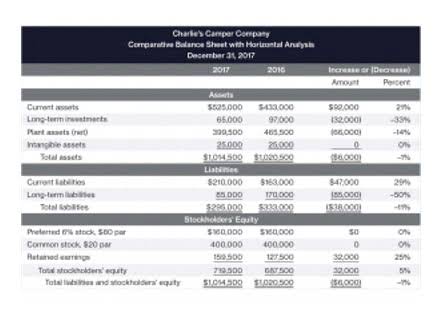
If retained earnings are reported to be increasing steadily over several periods, it may indicate that the company is consistently generating profits and reinvesting in its growth. On the other hand, if retained earnings would fluctuate or decline, it could signal financial instability or poor performance. Statement of retained earnings is a financial statement that shows exactly what retained earnings a company has at a specific point in time. These retained earnings are part of the company’s total shareholder equity and are reported separately from the profit and loss statement.

If you have questions or would like to explore how to improve the accuracy and consistency of your financial reporting, the DIGI-TEXX team is available to support further discussions. Preparing a classified balance sheet helps organize financial information into current and long-term categories, making it easier to evaluate liquidity, solvency, and overall financial structure. This format improves clarity, supports compliance with accounting standards, and enables better decision-making by management, investors, and lenders. If your company pays dividends, you subtract the amount of dividends your company pays out of your retained earnings. Let’s say your company’s dividend policy is to pay 50 percent of its net income out to its investors.
These funds can be used towards the development of the company such as research and development or infrastructure development. If your company is very small, chances are your accountant or bookkeeper may not prepare a statement of retained earnings unless you specifically ask for http://wmlforum.org/2022/10/04/qb-pro-certified-bookkeepers-in-san-jose-ca/ it. However, it can be a valuable statement to have as your company grows, especially if you want to bring in outside investors or get a small business loan. Discuss your needs with your accountant or bookkeeper, because the statement of retained earnings can be a useful tool for evaluating your business growth.
- The information provided on this website does not, and is not intended to, constitute legal, tax or accounting advice or recommendations.
- Next, we account for the increase in value as a result of net income, which was determined in the income statement to be $5,800.
- The financial statements provide feedback to the owners regarding the financial performance and financial position of the business, helping the owners to make decisions about the business.
- Financial models use the trends in the relationship of information within these statements, as well as the trend between periods in historical data to forecast future performance.

Non-cash items like write-downs, impairments, and stock-based compensation are the behind-the-scenes crew that also influence the plot. The numbers provide insight into a company’s financial position and the owner’s attitude toward reinvesting in and growing their business. There are some limitations with retained earnings, as these figures alone don’t provide enough material information about the company. A statement of retained earnings outlines how an organization’s retained earnings have changed during a specific reporting period — often quarterly or annually. Whatever you do, don’t stop at one statement; make calculating retained earnings a regular habit monthly, or at least quarterly—it’s good financial practice!
Step 1: Determine the financial period over which to calculate the change
In the grand tapestry of financial statements, retained earnings is the thread that weaves through a company’s strategic fabric, empowering it to act decisively and invest wisely. It’s the tangible evidence of Widget Inc.’s past prudence and a promissory contra asset account note for its assertive strides into future markets. By comprehending the choreography between beginning balance, net income, and dividends, you’ve gleaned how a statement of retained earnings is not just interpreted but also orchestrated. It’s the dance of digits that ultimately reveals the health and direction of a business. While the calculation itself is straightforward, the thought process behind how much to retain versus distribute in dividends reflects a company’s long-term strategic planning and fiscal discipline.
Are Retained Earnings Different from Revenue?
If you as a shareholder of the company owned 200 shares, you would then own an 20 additional shares, or a total of 220 (200 + (0.10 x 200)) shares once the company declares the stock dividend. Management knows that shareholders prefer receiving dividends, but they may not distribute dividends to stockholders. If they are confident that this surplus income can be reinvested in the business, then it can create more value for the stockholders by generating higher returns. This money can partly be distributed as dividends to the stockholders, while also being reinvested for business growth.